208 · Calendula Pink Surprise
Flower · Annual · Edible petals · Heirloom
About this plant
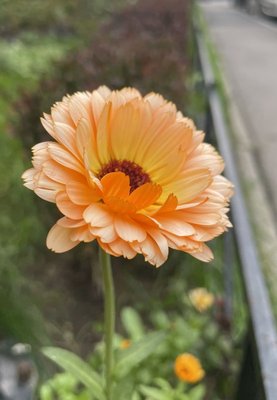
The unusual one: soft apricot petals washed with pink, ruffled and frilled, on a plant that blooms all winter here. Petals are edible and dry beautifully for tea or salve. In Fountain Hills this is a December-to-May flower — plant it now, enjoy it through spring, and let it reseed. Note: Cool season — plant now, but it will decline and die in the June heat. Frost hardy to ~25F. Keep it watered; it will not tolerate drying out.
Planting it at home
- When to plant out
- Right away. Our low-desert planting window for cool-season plants ends about mid-February.
- Where
- Full-sun winter bed, vegetable garden border, or container. Pairs well with lettuce and brassicas.
- Spacing
- 10 in (Baker Creek)
- Size
- ~12–24 in tall (Baker Creek does not state height for this cultivar; species range 8–24 in per Utah State Extension)
- Support
- Bush / compact — little or no support
Care
- Sun
- 8–12 hours full sun; tolerates part shade in hot climates
- Water
- Consistent moisture — the one calendula rule. Do not let it dry out.
- Feed
- A light flower fertilizer every 3–4 weeks while blooming (general guide).
- Pick / harvest
- Cut when the flower is half open or just opened that day, in the morning after dew dries. For drying/salve, pick as blooms begin to open and strip petals from the bitter center.
- Deadhead
- Cut off spent flowers to keep new blooms coming.
Good to know
- Caution
- Petals only are edible. Do not eat leaves or stems.
- Grown from
- Seed — sown by FHCG volunteers
- Uses
- Cut flower / bedding / container / edible & herbal / pollinator border
- Life cycle
- Annual (self-seeding)
- Heirloom or hybrid
- Heirloom — saved seeds grow true
- Pollinators
- Honeybees and native bees, plus hoverflies (syrphids), whose larvae eat aphids. A beneficial-insect magnet in the winter vegetable garden.
- Days to bloom
- 45–55 days to flower (Baker Creek)
- Heat (our summer)
- Prefers below 85F; stops blooming and declines in extreme heat (Utah State Extension). Finished by June in Phoenix
- Cold
- Yes — frost hardy, tolerates down to ~25F
- Color
- Apricot flowers tinged and blushed with pink, frilly/ruffled petals, darker centers
- Edible
- Petals only (slightly bitter, saffron-like). Strip from the bitter center (UA and UMN Extension).
Seed for our 2027 plants: rareseeds.com · Learn more: UA Extension, Maricopa Master Gardeners · Growing In The Garden (Mesa AZ)