217 · Marigold Orange Flame
Flower · Annual · Garden companion · Heirloom
About this plant
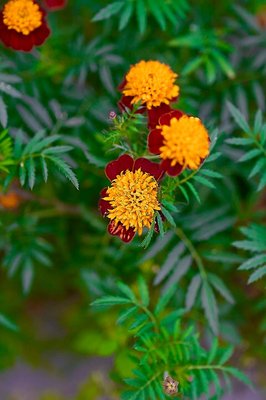
A dwarf French marigold with real character: bronzy red-orange outer petals wrapped around a bright orange crested plume, so each bloom looks like a small flame. At 10 to 12 inches it stays neat and tidy — perfect for bed edges, mass plantings and pots — and it flowers hard from spring into summer. A classic vegetable-garden companion, though the pest-control benefit needs dense planting, not a single plant. Note: Frost tender — plant out February onward once frost danger passes and soil is warm (min 60F). NOT IN Bloom at the sale; expect first flowers roughly 8–9 weeks after planting out, around late March–April. Do not over-fertilize.
Planting it at home
- When to plant out
- Wait until after our last frost (about mid-February) and warm soil — usually March. Until then keep the pot in a sunny, sheltered spot and bring it in on cold nights.
- Where
- Full sun bed edges, mass plantings, borders, and vegetable-garden edging; excellent in containers. Afternoon shade in midsummer.
- Spacing
- 8–10 in (Baker Creek)
- Size
- 10–12 in tall (Baker Creek) — a dwarf French marigold
- Support
- Bush / compact — little or no support
Care
- Sun
- Full sun; afternoon shade beneficial in low-desert summer
- Water
- Drought tolerant once established; well-drained soil, avoid soggy conditions. Do not feed heavily
- Feed
- A light flower fertilizer every 3–4 weeks while blooming (general guide).
- Pick / harvest
- n/a for cutting — at 10–12 in the stems are too short for the vase. This is a bedding and container plant, not a cut flower.
- Deadhead
- Cut off spent flowers to keep new blooms coming.
Good to know
- Caution
- Petals only are edible. Do not eat leaves or stems.
- Grown from
- Seed — sown by FHCG volunteers
- Life cycle
- Annual
- Heirloom or hybrid
- Heirloom — saved seeds grow true
- Pollinators
- Attracts beneficial insects rather than being a headline nectar plant: hoverflies, parasitic wasps and ladybugs (Growing In The Garden). The dense crested center is less accessible to bees than an open single flower.
- Days to bloom
- 55–65 days to maturity (Baker Creek)
- Heat (our summer)
- Good but not unlimited — tolerates heat well; afternoon shade helps it survive peak low-desert summer. Drought tolerant once established
- Cold
- No — not frost hardy; needs warm soil to establish
- Color
- Bronzy red to orange single outer petals surrounding a bright orange crested plume of short petals in the center — a two-tone crested (anemone-form) flower with a flame-like look
- Edible
- Petals only, bitter; use sparingly as a garnish.
Seed for our 2027 plants: rareseeds.com · Learn more: UA Extension, Maricopa Master Gardeners · Growing In The Garden (Mesa AZ)